5 Common Mistakes Insurance Agents Make When Buying Leads
Insurance

The five most common mistakes insurance agents make when buying leads are: buying leads outside the hours they can respond, buying on price rather than fit, buying more leads than they can manage, buying without a follow-up system in place, and giving up on a vendor or channel too early. Most poor results trace back to these habits. Fix your lead-buying process and watch as the same leads start to perform better and deliver results.
Here are the five most common buying mistakes that cost agents their budget, and how you can avoid each one:
Mistake 1: Buying leads outside your business hours
A lead is the most valuable in the minutes right after it comes in. One that arrives at 10 p.m. and sits untouched until the next morning has gone cold by the time you see it. Responding within minutes rather than hours makes a real difference in who you actually reach.
The fix: Match your lead delivery to the hours you are working. For example, if your business hours are Monday to Friday, 9 a.m. to 5 p.m., set your leads to arrive inside that window so you can respond while they are still fresh. If your lead source lets you control delivery timing, use it. A smaller number of leads you can call within minutes will do more for your business than a full inbox that ages overnight.
Mistake 2: Buying on price instead of fit
The cheapest leads might look appealing, especially on a first purchase. But a low price means nothing if the leads are for coverage; you do not sell, areas you do not serve, or customers you are not licensed to write.
A cheap lead you cannot service well is more expensive than a well-matched lead at a higher price, because you pay for it and get nothing back. Price should be one factor, well behind whether the lead matches your book.
The fix: Judge leads on fit first. Set your preferences based on the coverage types you sell and the areas you serve, then compare price among leads you can actually convert. Track your cost per acquired customer, not your cost per lead, since that reflects real value.
Mistake 3: Buying more leads than you can actually work
Buying in bulk can feel productive, but volume you cannot work is a waste of your budget. If you buy 50 leads and only have time to call 15 of them fast, the other 35 sit and age, and you paid full price for all 50 leads.
Every lead you buy carries an obligation to work it while it is fresh. Buying past your capacity guarantees that some of what you paid for goes to waste.
The fix: Match your lead volume to the time you have to work leads well. Start with a number you can genuinely call fast and follow up on, then scale up only once you have the capacity to keep that standard. A smaller batch that works properly beats a large batch that works halfway.
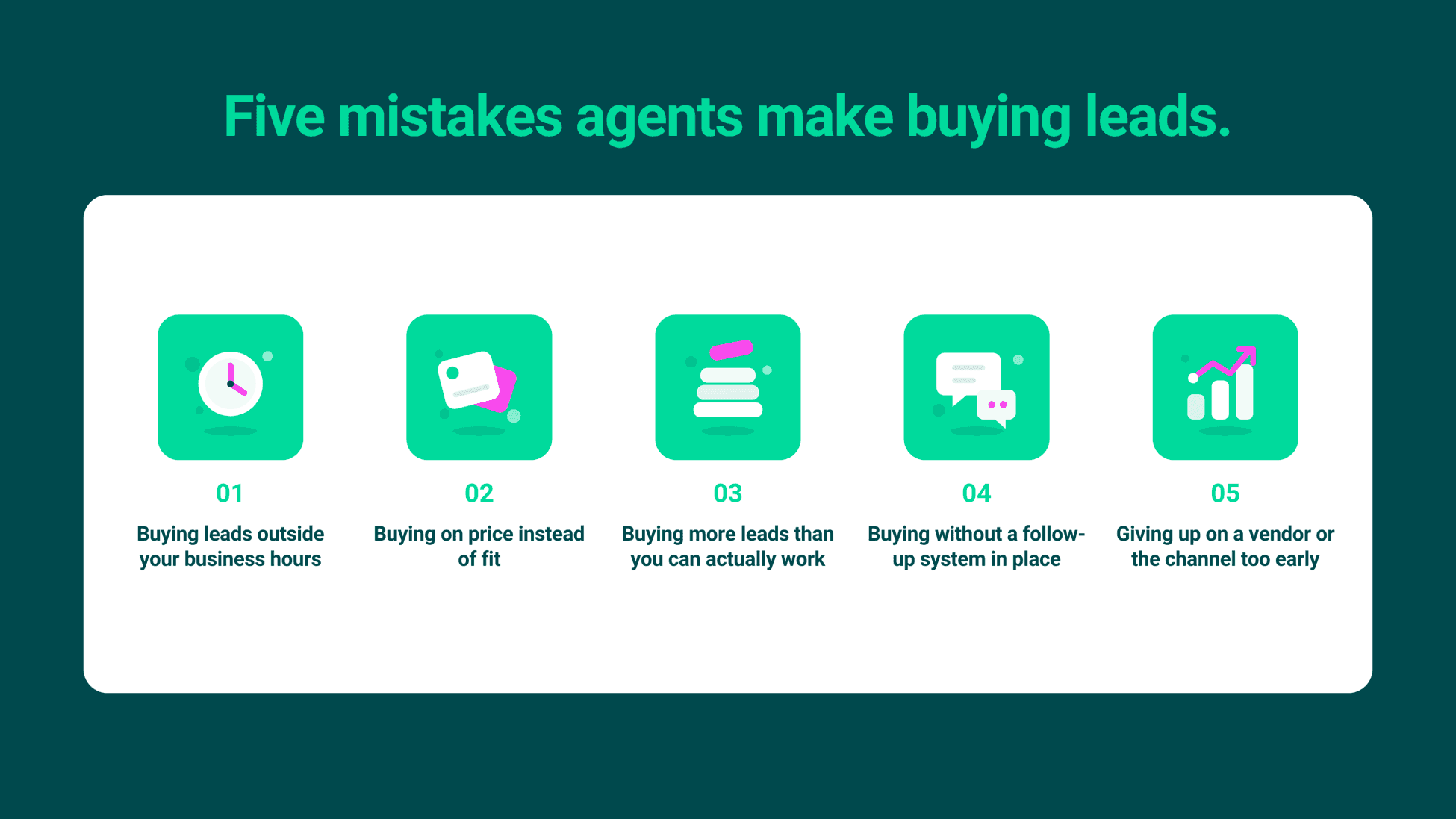
Mistake 4: Buying without a follow-up system in place
Many agents buy leads before they have a tested framework for lead follow-up or any plan for working with them. Calls happen when the agent remembers; attempts go unlogged and leads to slip through with no record of who was contacted or when. When results come up short, there is no way to tell whether the leads were weak or never worked.
This matters because most conversions take persistence. Velocify’s analysis of about 3.5 million leads found that the sixth attempt reached 93% of converted leads, while about half of all leads never received a second call. Without a system, most agents fall into that half by accident.
The fix: Put a simple follow-up process in place. Decide how many attempts you will make, across which channels, over how many days, and log every attempt. A basic spreadsheet or CRM is enough to start. The point is that no lead gets dropped by forgetfulness.
Mistake 5: Giving up on a vendor or the channel too early
A slow first week leads a lot of agents to conclude that a vendor sells bad leads, or that paid leads do not work at all. A handful of leads is too small for a sample to judge anything. Normal variation alone can produce a quiet stretch that says nothing about the source.
Quitting early also throws away the money already spent, since the agent never stays long enough to refine their process and see what the channel can actually do.
The fix: Speed to first contact > Contact rate > Quote appointment rate > Close rate > Cost per acquired customer. Judge the vendor on that sample of leads, not on a single good or bad day. Give yourself enough data to make a real decision.
Most of these mistakes come down to buying more than you can work or receiving leads when you cannot act on them. PX Local lets you set your lead preferences. You set your own delivery hours, so every lead fits your book and arrives when you are ready.