What Is TCPA, and Why Does It Matter When You Buy Leads?
Customer Acquisition

You paid for the lead. You made the call. If the consent behind it was bad, you own the risk.
The TCPA is the federal law that governs marketing calls and texts in the United States. It carries real financial penalties, and under it, responsibility for a call generally follows the person who placed it.
For an agent who buys leads, that makes one thing worth understanding: what good consent documentation looks like, and how to check for it before you dial. Here is a plain explanation of the law, its penalties, and what a well-documented lead includes.
What the TCPA is?
The Telephone Consumer Protection Act (TCPA) is the federal law covering marketing calls and text messages. It sets the rules for when a business can contact a consumer, and it requires prior express consent for certain automated calls and texts.
The TCPA is the federal law covering marketing calls and texts. Damages start at $500 per call and increase to $1,500. Consumers get four years to file. Put this in perspective: the call you make this afternoon can come back in 2030.
Buying a lead does not hand the risk to the lead seller. Courts look at who dialed. "My lead seller said it was compliant" has not saved anyone. What saves you is being able to show the consent yourself.
What good consent looks like?
Three things ride along with a clean lead. Train yourself to look for them.
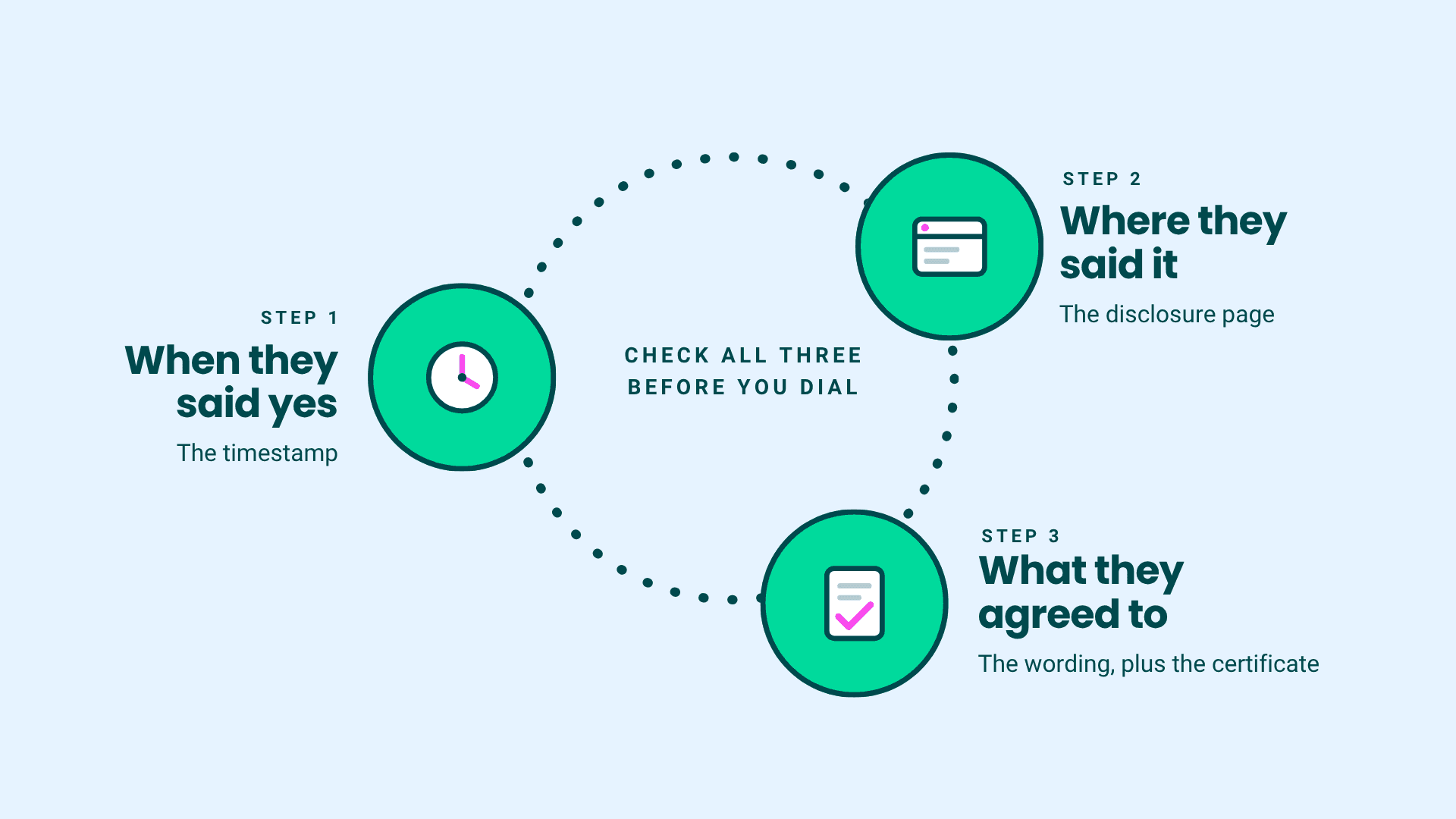
When they said yes: A timestamp of when the form was submitted; it proves consent existed and tells you how old it is.
Where they said it: The web page the consumer was on. If you cannot open that page, you cannot show what they agreed to.
What they agreed to: The wording itself, backed by a Jornaya certificate, for example, that recorded the session. That is the difference between saying you had consent and proving it.
A note on opt-outs
The TCPA also governs how consumers withdraw consent. As of April 11, 2025, a consumer can revoke consent through any reasonable method, and the business must honor that request within 10 business days across the channels it uses. A clean, logged opt-out process is part of any calling operation.
What to check before you dial
Think of this as a ten-second quality check on each lead:
Timestamp is present and fresh enough to call
The source page opens and shows the disclosure
The consent wording names a specific company, or a short and defined list
A consent certificate is attached and claimable
The lead is clear of your own do-not-call list
Opt-outs are logged and honored on every channel
This article explains the TCPA in general terms. It is not legal advice. For how these rules apply to your business, check with your own attorney or compliance resource.
Buy from a source that shows its work
The checklist only works if the lead arrives with its history attached. PX Local shows you where every lead came from and when the consumer asked to be contacted, and you set the coverage types and delivery hours on top of that.