5 Key Elements of a Winning Insurance Sales Call (With Scripts)
Insurance

A winning sales call tells the consumer one thing in the first ten seconds: you are already working on their quote. Tone, timing, word choice, and follow-up all exist to support that message.
The lead is a real person waiting for a call. If you have read why you should call your leads immediately, you know speed wins the first contact.
The script decides what happens next:
What are the 5 key elements of a winning sales call?
Consumer Point of View: Always think from the consumer’s point of view. They filled out a form and shared their details, so a voicemail that says, “Call me back so I can get you a quote.” asks them to do the work twice. Open with what you have already done: “I have your details and I’m putting your quote together now”.
The Tone: Your tone should be warm, calm, and genuinely helpful. If you’re feeling rushed or irritated, wait a few minutes before calling until you feel positive, so the consumer hears confidence and positivity, not stress.
Timing: Real-time leads are actively shopping. Call back as quickly as you can and leave a voicemail if they don’t pick up. Always keep a short, friendly message of about 14–24 seconds ready. It should sound supportive and clear.
Word Choice: Use language that creates ownership and progress. For example, “I’m putting together your offer now” shows that this is YOUR offer I’m working on. Talking about fitting “your family’s budget” shows that you’re putting in your best effort to find an affordable offer.
Frequency: Online shoppers are used to multiple follow-ups. Call within the first 5 minutes, then plan two to three call attempts a day during the first week, mixing in emails and texts. Make at least six attempts before you move on. Remember that consistent, professional follow-up is a normal part of the online buying experience.
Do this: Check your current voicemail against all five. If it asks the consumer to call you back so you can get them a quote, rewrite that line first.
Call script examples for day 1, day 2 and day 3
The three scripts below show how the five elements sound in a real call. Each one is written for a different day of follow-up, so the reason for calling changes while the ownership language stays the same. Use them as a starting point and swap in your own name, agency and product.
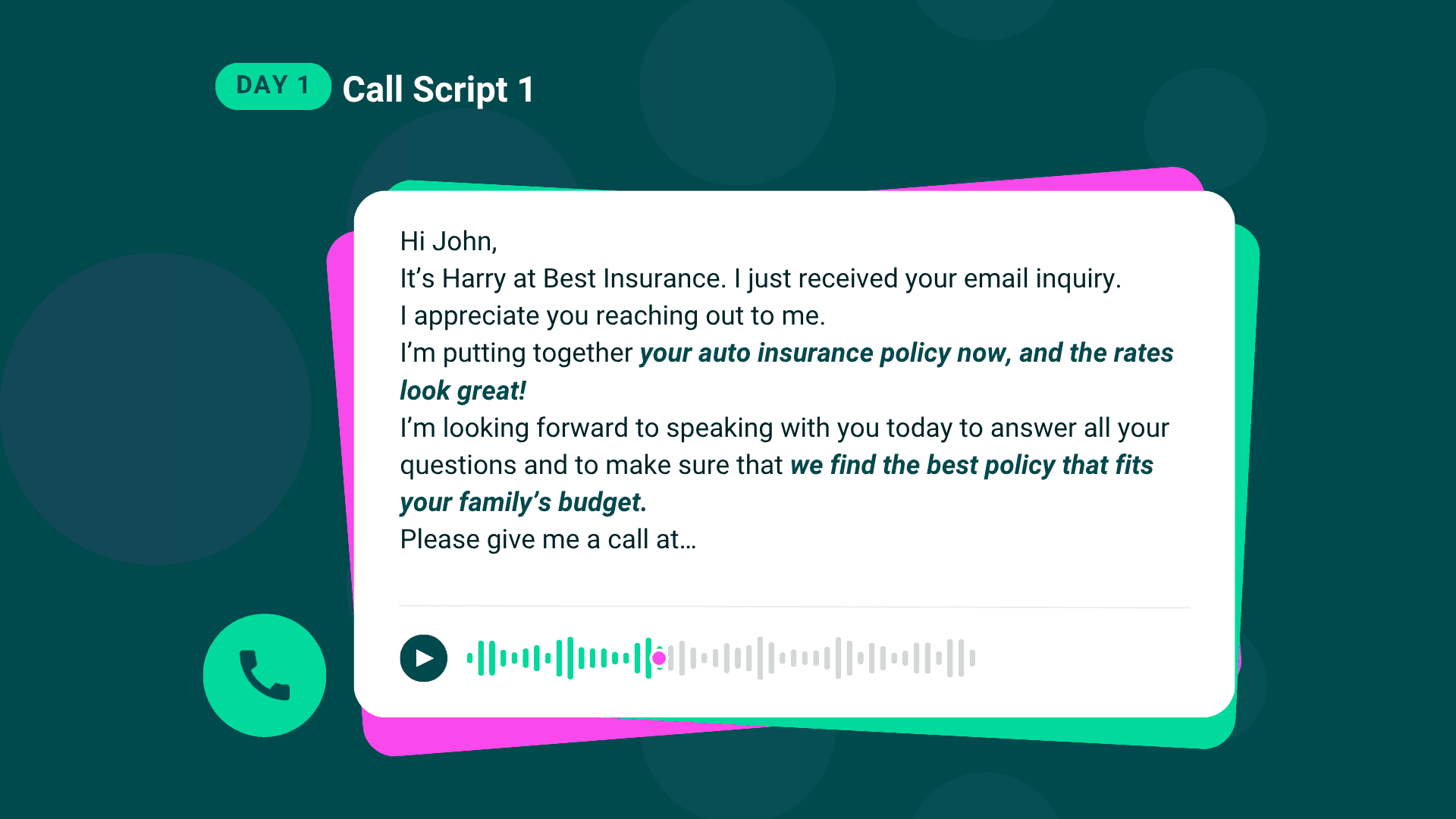
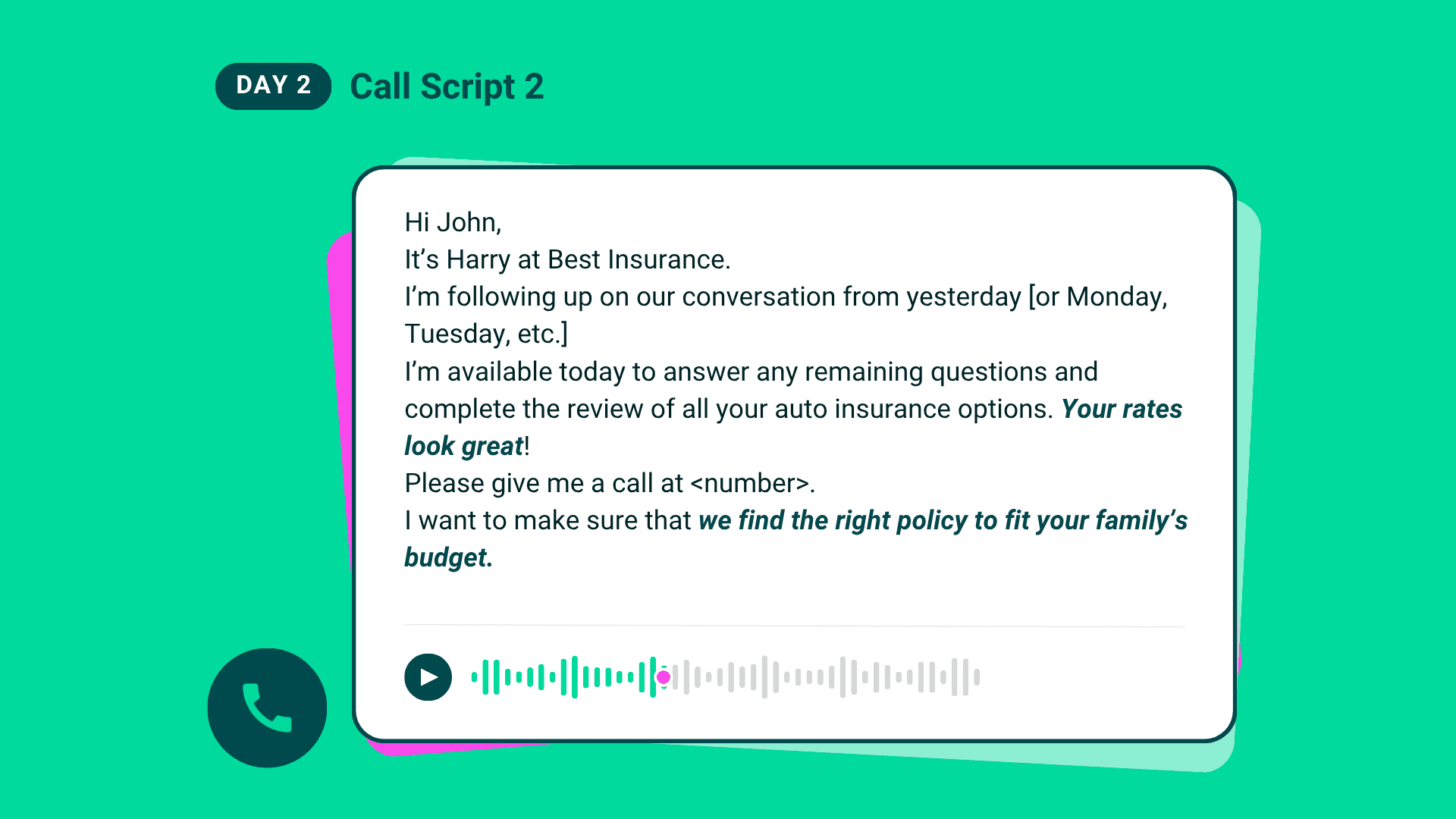
The "family's budget" line works especially well with price-sensitive households, one of the two types of insurance shoppers agents are talking to in 2026.
Do this: Record your day 1 voicemail and time it. If it runs past 24 seconds, cut it down.

How to make these scripts your own?
Read each script out loud and cut anything that does not sound like you. Track which day's message earns the most callbacks and build on it. For days 4 through 8, rotate these three and pair each call with an email, as covered in our best practices for handling insurance leads.
If your contact rate stays low even with a strong script, look at the leads themselves. Lead age affects how many shoppers pick up, no matter how good the message is.
Do this: Use one script on every new lead for five days before changing it.
Get leads that arrive when you are ready to call
Every script above works best when you call within minutes. PX Local lets you set your own delivery hours, so leads arrive when you are at your desk with your script ready. You also see each lead's source and consent record before you buy.