How Many Insurance Leads Should You Buy? (And How to Scale From There)
Insurance

Quick answer
The right number of insurance leads to buy is the number you can call within five minutes and follow up on fully. For a solo agent, that often lands around 5 to 10 fresh auto leads a day. Use the four steps below to find yours, whether you're placing a first order or adjusting an existing one.
This guide covers real-time leads, the ones delivered seconds after a shopper asks for a quote. Aged leads and direct mail leads follow different math.
Every agent who buys leads runs into the same question: how many? The instinct is to buy as many as the budget allows, fill the pipeline, and get to work. That instinct is what causes most early losses.
Your budget sets the ceiling, but your capacity sets the right number. A lead you buy and never call fast, or never follow up on, is money spent for nothing.
Why does buying as many leads as you can afford backfire?
Picture buying 50 leads in a week. You call the first handful within minutes, have a few good conversations, and then the day fills up. The rest sit. By the time you reach them, they have cooled off or already spoken with another agent. You paid full price for all 50 and worked maybe 20 of them properly.
This is the most common mistake, and it is covered in more detail in the mistakes agents make when buying leads.
How many leads can one agent work in a day?
To see your true capacity, look at what working a single lead actually takes:
A first call within five minutes of the lead arriving.
Several follow-up attempts across phone, text, and email, spread over the following week.
A logged record of each attempt so nothing gets dropped.
That is real time per lead, and it stacks. The leads you buy on Monday are still in your follow-up sequence on Thursday, while Thursday's new leads need their own fast first call. Each day's intake adds follow-up load on top of the next day's fresh leads. This is why your daily intake has to stay well below the number of calls you could make in a single burst.
How do you calculate how many leads to buy?
A simple way to find your number:
Decide how many hours a day you can give to new leads, on top of servicing current clients.
Estimate how many brand-new leads you can give a five-minute first call and start a follow-up sequence for in that time.
Set that as your daily intake, then lower it for the first couple of weeks at any new volume.
Multiply your daily intake by the days you want to buy across to get your order size.
A worked example:
Step | Number |
New leads you can call fast and start follow-up on per day | 10 |
Starting daily intake (lowered for building follow-up load) | 6 |
First-week order (5 buying days) | About 30 |
Your own number will depend on your hours and pace, and the same four steps will get you there.
Should new agents buy leads at all?
Some advisers tell brand-new agents to hold off on buying leads until they have practiced on warm contacts first. That advice has a point: a new agent closes fewer leads, so each one costs more per sale. A small daily order is a reasonable middle path. It puts you in front of real shoppers while keeping your spend low enough that early mistakes stay cheap. If you have never quoted a policy over the phone, start at the low end of the 5 to 10 range.
How much should you budget for leads?
Multiply your daily intake by your price per lead to get your daily spend. Track cost per customer once policies start coming in, since that number tells you more than price per lead. (How to calculate that is here.)
PX Local has a $25 daily minimum budget and no contracts, so you can adjust spend as your capacity changes.
When should you buy more leads?
Scaling works only when you are already handling your current volume well. Three signals tell you that you are:
You reach every new lead with a fast first call, including the last ones in each day's batch.
You complete the full follow-up sequence on every lead.
Your cost per acquired customer is holding steady or improving.
If any of those is slipping, you are already at your ceiling, and adding leads at that point will lower your close rate.
The same three signals tell you whether you're already buying more than you can work. If any is slipping, scale back until all three hold.
How do you scale lead volume without hurting your close rate?
When the three signals are green, raise your volume in small steps rather than big jumps. Add a few leads a day, hold there until you are hitting your standard again, then add a few more.
When you reach the limit of what you can personally handle, buying more is one option among several. You can tighten your filters so the leads you do buy fit your book more closely, or bring on help to work the volume.
Does lead delivery timing affect results?
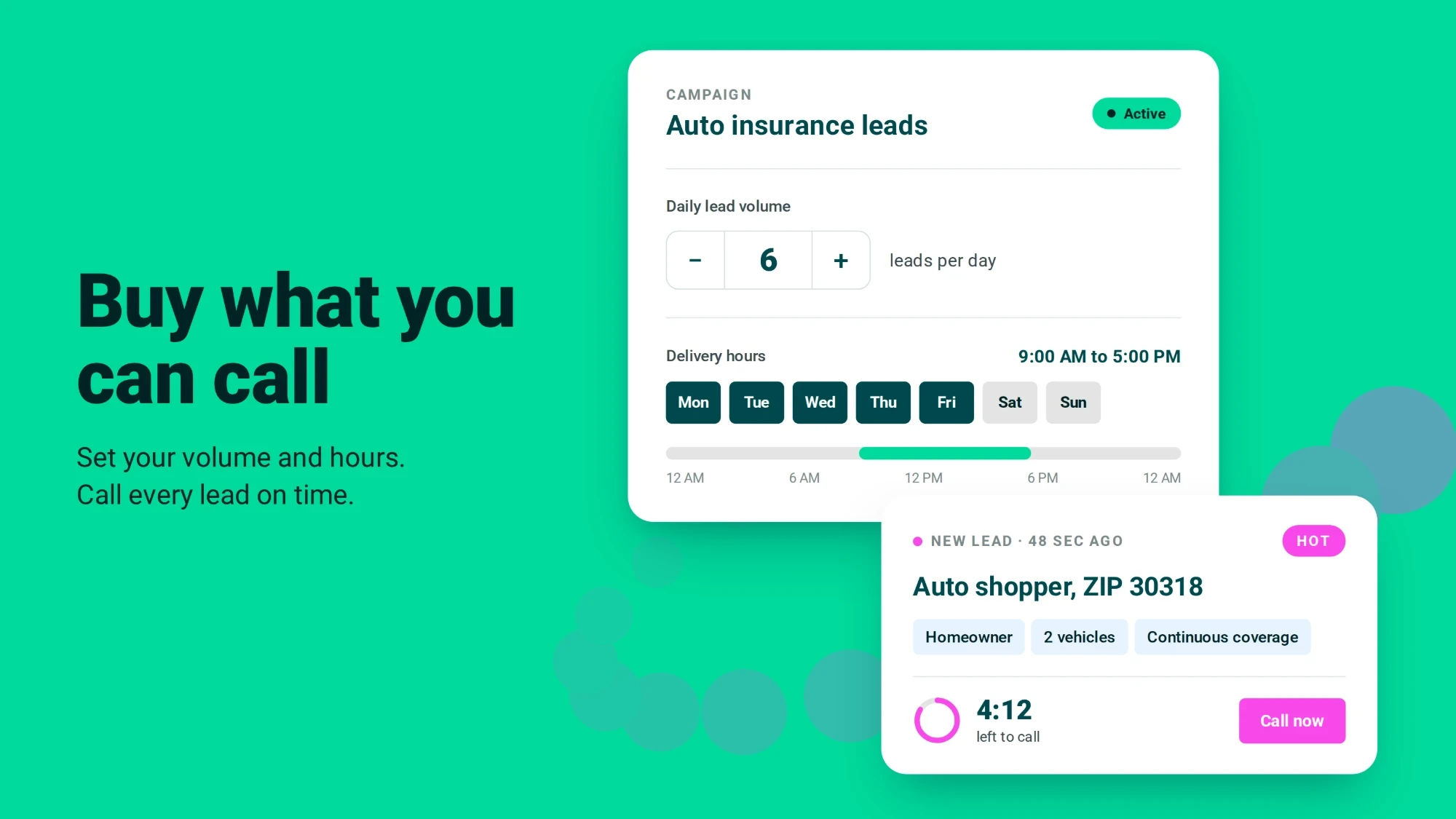
A full pipeline that arrives overnight, when no one is available to call, produces worse results than a smaller number that lands during your working hours. Matching delivery to the hours you can respond keeps every lead inside its best window for a first call. Set your delivery hours with the same care you give your volume.
Buy what you can call
PX Local lets you set your lead volume and your delivery hours, so you buy what you can actually handle and leads arrive when you are ready to call.